In today’s competitive digital world, businesses need more than traditional advertising to attract and retain customers. People search for information before making purchasing decisions, compare different brands, and look for businesses they can trust. This is why content marketing has become an important part of modern digital growth.
Instead of directly asking customers to buy something, businesses can provide useful information that answers questions, solves problems, and helps people make informed decisions. This approach can create stronger relationships between brands and their audiences.
From blog posts and social media updates to videos, guides, case studies, and website content, businesses have many ways to communicate with potential customers. A well-planned strategy can increase visibility, support SEO, improve brand awareness, and generate qualified leads.
For a digital agency such as WorkVibes, creating useful resources can also help businesses understand how digital services can solve their everyday challenges.
What Is Content Marketing?
Content marketing is a strategy where a business creates and distributes useful, relevant, and valuable information for a specific audience. The purpose is not simply to advertise a product or service. Instead, businesses create content that helps people understand a topic, solve a problem, or make a better decision.
For example, a web design company could publish an article explaining how to identify an outdated website. Someone searching for this information may discover the company through that article. If the information is useful, the visitor may later explore the company’s website design services.
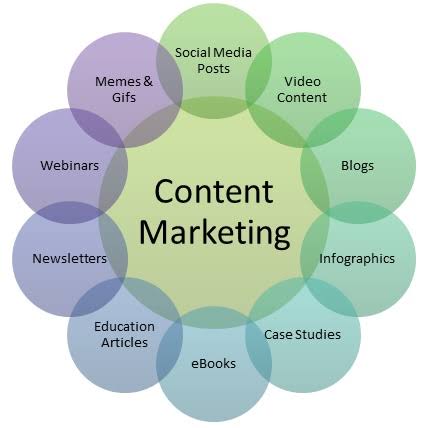
Different types of content can be used depending on the audience and business objective, including:
- Blog posts
- Social media posts
- Videos
- Infographics
- Case studies
- Email newsletters
- E-books and guides
- Website pages
- Frequently asked questions
- Industry reports
The best approach is to create information based on the real needs, interests, and questions of the target audience.
Why Is Content Marketing Important for Businesses?
A strong content marketing strategy gives businesses an opportunity to communicate with potential customers without relying entirely on paid advertising. When useful content is published consistently, a business can create more opportunities to appear in search results and social platforms.
Good content can support multiple marketing goals at the same time. It can bring visitors to a website, educate potential customers, establish expertise, generate leads, and strengthen brand recognition.
Unlike some short-term advertisements, valuable content can continue providing benefits after publication. An informative article may attract visitors for months or even years when it remains relevant and continues to answer a useful search query.
1. Builds Brand Awareness
People cannot choose a business they do not know exists. Content marketing gives companies more opportunities to introduce their brand to potential customers.
A business can publish educational articles, social media posts, videos, and guides to communicate its knowledge and personality. When people repeatedly find useful information from the same company, they gradually become more familiar with the brand.
For example, a digital agency that regularly shares practical information about SEO, web design, branding, and social media can become more recognizable among business owners searching for digital solutions.
The objective is not to mention the brand in every piece of content. Instead, the business should focus on becoming associated with useful knowledge and reliable information.
2. Helps Attract the Right Audience
Getting a large amount of website traffic does not automatically mean a business will receive more customers. What matters is attracting people who are genuinely interested in the products or services being offered.
A targeted content marketing approach helps businesses create information around specific questions, problems, and search terms. This makes it easier to reach an audience that is already looking for a solution.
For example, an article about improving a local business website can attract business owners who are actively interested in website improvements. Such visitors may be more valuable than people who have no connection to the service.
This targeted approach can make website traffic more relevant and useful.
3. Supports Search Engine Optimization
SEO and content marketing work closely together. Search engines need useful and relevant information to understand what a website offers and which searches its pages may answer.
Publishing high-quality content around relevant topics can create additional opportunities for a website to appear in organic search results.
However, businesses should not simply repeat keywords throughout an article. Modern SEO focuses on relevance, search intent, usefulness, readability, and user experience.
An effective strategy should consider:
- Search intent
- Relevant keywords
- Helpful headings
- Original information
- Internal linking
- Clear page structure
- Readability
- Accurate information
When these elements are combined properly, content can support stronger organic visibility.
4. Builds Customer Trust
Trust plays an important role in purchasing decisions. Customers are more likely to consider a business when they believe that the company understands their needs and can provide a suitable solution.
Content marketing allows businesses to demonstrate knowledge before asking visitors to make a purchase. Companies can answer frequently asked questions, explain their processes, share practical advice, and publish case studies.
This gives potential customers an opportunity to learn about a business before contacting it.
Trust is not created by making unrealistic promises. It develops when a brand consistently provides honest, useful, and easy-to-understand information.
5. Generates Quality Leads
Useful content can become an important part of lead generation. Imagine that a business owner searches online for a solution to a specific problem and discovers an informative article.
After reading the article, the visitor may want additional help. A clear call-to-action can then direct that person toward a service page, contact form, consultation, or enquiry.
The journey can look like this.
The article may not generate an immediate sale, but it can move a potential customer closer to taking action.

6. Helps Customers at Different Stages
Not every website visitor is ready to purchase immediately. Some people are discovering a problem, while others are comparing different solutions.
A good content marketing strategy can address customers at different stages of their buying journey.
Awareness Stage
At this stage, people are trying to understand a problem.
Examples:
- What is SEO?
- Why does a business need a website?
- What is digital marketing?
Consideration Stage
Here, people understand their problem and are researching possible solutions.
Examples:
- SEO versus paid advertising
- How to choose a digital marketing agency
- What should a business website include?
Decision Stage
At this stage, potential customers are considering a specific service or provider.
Examples:
- Website development services
- SEO agency services
- Digital marketing consultation
Creating useful information for every stage can help businesses stay connected with potential customers throughout the decision-making process.
7. Gives Social Media More Value
Social media requires a regular supply of useful and engaging material. Businesses without a clear strategy often struggle to remain consistent.
One detailed blog can become several social media posts. This is one of the biggest advantages of a planned content marketing system.
For example, one article can be converted into:
- Instagram carousel content
- Facebook posts
- LinkedIn updates
- Short video ideas
- Infographic points
- Email newsletter content
This process is known as content repurposing. It allows businesses to get more value from the time and resources invested in creating original material.
Instead of creating every social post from zero, businesses can use existing resources as the foundation for multiple formats.
8. Creates Long-Term Marketing Value
Paid advertisements can stop bringing visitors when a campaign ends. High-quality content can continue attracting people after it has been published.
A useful article may continue receiving organic traffic, supporting internal pages, earning backlinks, and introducing new visitors to a brand.
This does not mean every article will remain successful forever. Information can become outdated, search behaviour can change, and competitors can publish better resources.
For this reason, businesses should review important pages regularly and update information whenever necessary.
9. Establishes Industry Authority
Customers naturally prefer businesses that demonstrate knowledge and expertise. Content marketing provides an opportunity for companies to discuss industry challenges, answer questions, explain complex subjects, and share practical insights.
Over time, consistently useful information can strengthen a brand’s authority.
For example, a digital agency that regularly publishes detailed information about SEO, websites, social media, branding, and online advertising can demonstrate its understanding of the digital industry.
Authority is not created simply by publishing hundreds of articles. It comes from producing information that is genuinely useful and relevant to the intended audience.
How to Create an Effective Content Strategy
Successful content marketing requires more than publishing articles regularly. Businesses need a clear plan that connects content with their audience and business objectives.
Understand Your Audience
Start by identifying your ideal customers. Understand their goals, challenges, questions, interests, and concerns.
Research Topics
Choose subjects that your audience actually cares about. Look for common questions, search trends, industry discussions, and areas where existing information is weak.
Select the Right Format
Not every subject needs to be a blog post. Some topics may work better as videos, guides, infographics, social media posts, or case studies.
Create Original Information
Avoid simply rewriting information from other websites. Add your own examples, explanations, experience, data, or point of view.
Optimize for Search
Use relevant keywords naturally, create descriptive headings, write useful metadata, maintain clean URLs, and connect related pages through internal links.
Include a Clear Call-to-Action
Tell readers what they can do next. Depending on the objective, this could mean reading another article, contacting the business, requesting a consultation, or exploring a service.
Measure Results
Track important performance indicators such as organic traffic, engagement, rankings, leads, and conversions. These results can help identify which topics are performing well and which pages need improvement.
Common Mistakes to Avoid
Even businesses that publish regularly can struggle when their strategy lacks direction.
One common mistake is creating articles simply because competitors are publishing similar topics. Another is writing primarily for search engines instead of real readers.
Keyword stuffing is also a problem. Repeating the same phrase unnecessarily can make an article difficult to read and reduce its overall quality.
Businesses should also avoid creating several pages that target exactly the same search intent. Each article should have a clear purpose and provide something valuable to the audience.
Inconsistent publishing is another challenge. A realistic schedule is generally better than publishing many articles for a short period and then stopping.
Businesses should also remember that updating existing content can be valuable. Old articles may need new statistics, examples, links, or explanations to remain useful.

Content Marketing and Business Growth
The real value of content marketing comes from its ability to connect business goals with customer needs.
Useful content can bring people to a website through search engines, educate them through social media, answer their questions, and guide them toward a service or product.
It can also help businesses communicate their personality and expertise. Instead of simply saying that a company is knowledgeable, businesses can demonstrate their knowledge through the information they provide.
This creates a more natural relationship with potential customers.
For growing businesses, content can therefore become an important digital asset. A well-written article published today may continue attracting visitors and supporting the brand long after its original publication date.
Final Thoughts
Content marketing is an important part of modern digital growth because it helps businesses communicate with customers in a useful and meaningful way.
It can improve online visibility, support SEO, build brand awareness, strengthen credibility, attract relevant visitors, and generate potential leads. However, success does not come from publishing the largest possible number of articles.
The focus should always be on creating useful, original, relevant, and audience-focused content.
Businesses that understand what their customers need and consistently provide helpful information can build stronger digital relationships over time.
For WorkVibes, a well-planned strategy can help businesses communicate their value through blogs, website content, social media, guides, and other digital formats. When content is created with a clear purpose and a genuine focus on the audience, it can become a long-term asset for sustainable business growth.
Read More :- https://workvibes.in/about-us/
Read More :- https://copyblogger.com/content-marketing/